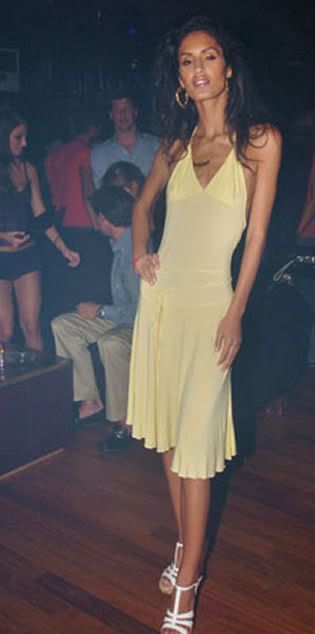
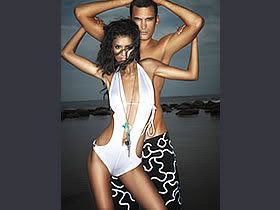
The winner of "America's Next Top Model" has been chosen! Say hello to Jaslene Gonzalez:
I figured since I discuss body image so much here, it was important to show these pictures. Every young girl watching this show has been told that Jaslene Gonzalez is the picture of beauty. The message this sends is terrible. She is so thin that she looks unhealthy and should under no circumstances be a role model for girls.
*
Interestingly, "America's Next Top Model" is hosted by Tyra Banks, the same person I praised in an earlier entry for sending positive messages to girls.
"Anorexia and bulimia kill, but the decay of the soul and mind and personality is the worst part. Beyond the magazine covers and Twiggy bodies lie damaged people, hoping for a new life."
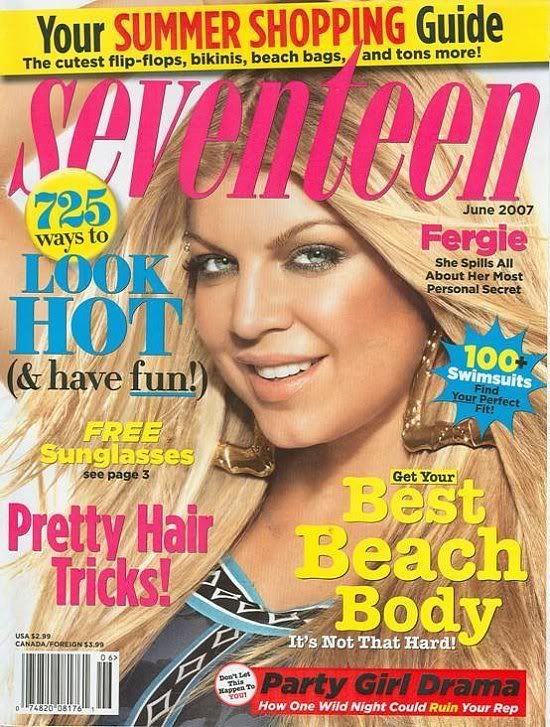
A lot of people seem to be confused over the new cover of Seventeen magazine. It says it is "Fergie" featured in the photo, but things just don't look right.
Check out this website for comments from readers who can tell how much her face has been altered.
In other advertising news, a recent milk campaign has been called out for "false and misleading" claims that drinking milk promotes weight loss.
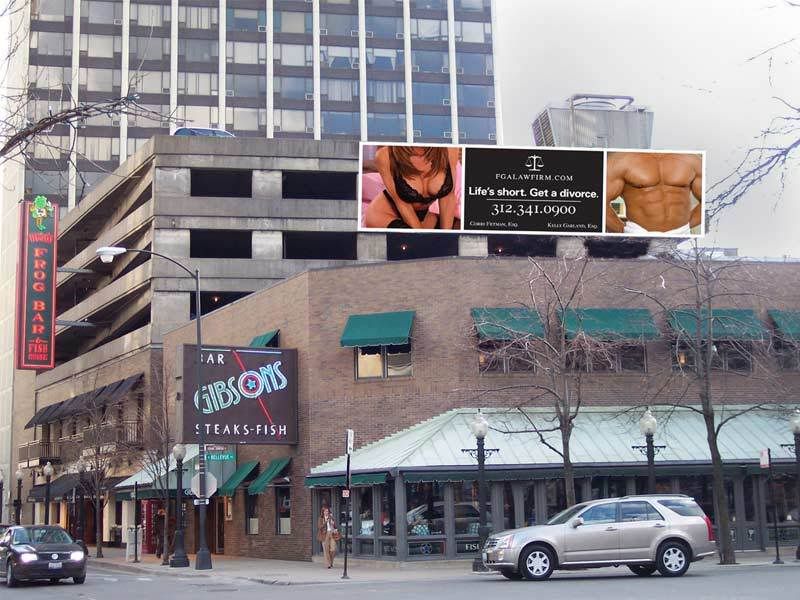
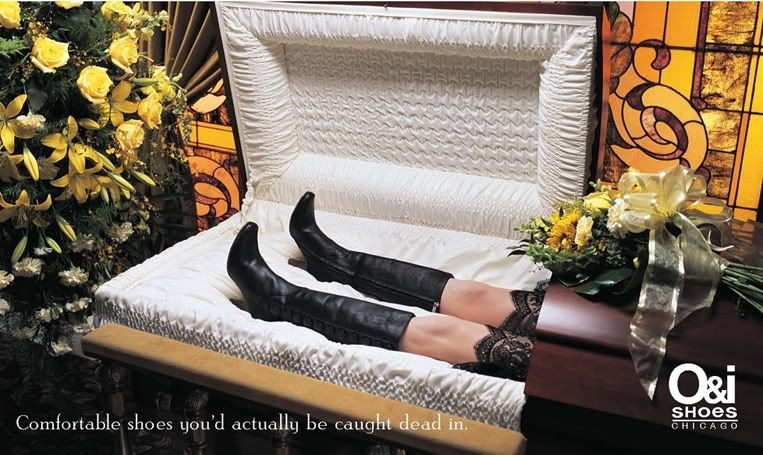
This ad sends a really weird message, along with being guilty of decapitation and very bad image altering (which is much more apparent on the enlarged version, which unfortunately would not post.)
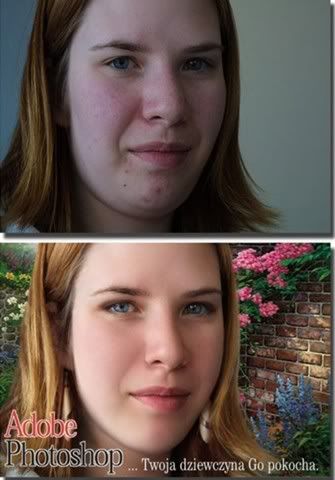
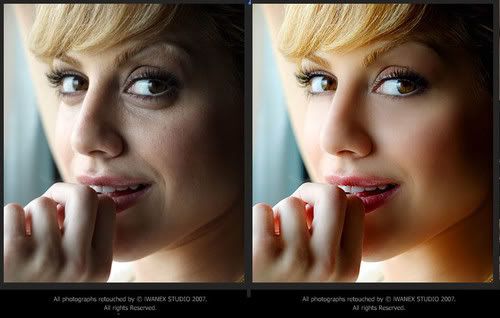
Adobe Photoshop and similar programs can do amazing things when it comes to altering images. It's understandable that magazines, etc., want to touch-up celebrity images and make everything look as good as it can. But the art of the touch-up has been taken to new extremes as technology has advanced. Images are sometimes modified so much that the subject looks as if they have undergone plastic surgery.
Some of the artists doing this are so good, that most people don't even know they are looking at an altered image, and unfortunately many people will admire or even envy the "beauty" they see in the picture. On the other hand, some photos I've seen in major publications are altered so unskillfully that it's completely obvious. It has gone so far that sometimes the images take on cartoon-like qualities. Our standard of female beauty has become so hard to attain that even the most beautiful people have their images altered on magazine covers to make them even more "perfect." And so many people buy into this. Men admire the images of women, while women envy them. And how ridiculous is this when the images are not even true to reality? There is more real beauty in the world to admire than would fit on the cover of every magazine printed, yet we are wasting our time on this destructive phoniness.
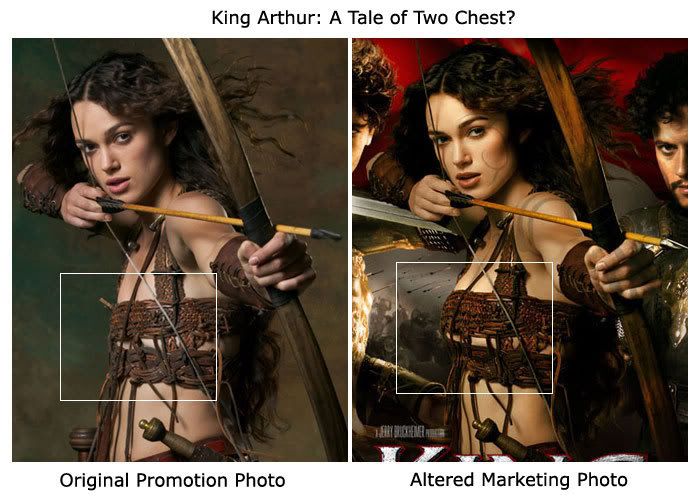
There is so much evidence that these images destroy girls' self-esteem. And what is beauty anyway when we are all trying to look the same? Differences are what make us beautiful. Listen to the messages that a publication like Playboy sends our culture, and it could be determined that the epitome of female beauty entails light skin, a thin physique, blond hair and a tan (both of which are often fake) and the ubiquitous breast implants (I find it hilarious that the women are marketed as "girl next door" after all that surgery and airbrushing.) The ideal has become nearly impossible to achieve. Plastic surgery rates for women are increasing at a rapid pace, most notably breast implant surgeries. I am not against plastic surgery, but we need to promote real beauty instead of lies. Interestingly, some celebrities have talked about how their images have been altered, and some have even complained about it. Both Angelina Jolie and Kirsten Dunst have publicly complained about the way their chest sizes were artificially augmented in images to promote their respective roles in "Tomb Raider" and "Spiderman."
Jessica Alba talked in an interview about the same thing being done to her image to promote "Into the Blue." And both Alyson Hannigan and Jennifer Aniston have marvelled at the "photoshop plastic surgery" done to their images-- Hannigan publicly questioned whose breasts had been edited onto her body for her FHM cover photo, and Aniston sued a publication for making her nose appear smaller than it is.
This website is a must-see. Click on "portfolio" on the top. Click one of the images at the bottom, and run your mouse over it to see the image before it was altered. Most notably, check out Kelly Clarkson (third one on the top row.)
And we've all seen the Dove "Evolution" clip already, right?
All too frequently, celebrities’ heads are grafted onto other peoples’ bodies for promotional purposes. Julia Roberts, in the poster for her movie Pretty Woman, was outraged to discover that a picture of her head had been placed on the slimmer body of a model.
I had to comment on the whole Imus scandal, especially after it started turning into just what I wanted it to turn into. Last night as I casually walked by a waiting-room television, I noticed the topic of discussion on the news was Imus' racist/sexist comment and the connection to the way women are degraded in hip-hop music and videos. The topic of sexism in hip-hop subsequently arose twice again during my day... as in, people are now actually talking about this problem on a large scale! And that is very good. I just read a great article about Barack Obama's reaction to the Imus comment, and I think it relates very much to this blog.
"I do think we've seen a coarsening of the culture," Obama said in an interview with The Associated Press after the town hall meeting. As a constitutional lawyer, Obama said he was a free speech advocate. "But just because you can say something doesn't mean you should say something," he said. "And I think that we have not talked enough about the harmful images and messages that are sent."
It's about time that I backed up the content of this website with another scientific study. The research that has been done on the topics I discuss here serve as the foundation for my arguments. There is research being done every day on the effects of media images, so one just needs to turn to the abundance of data available to know that my purpose here is not merely to assert my opinion.
Just in case you don't want to go through the whole 16 page journal article, here are some highlights:
There are data that show that women are objectified in the media, that girls and women experience a high rate of body dissatisfaction and eating problems, and that exposure to objectified media images of women is related to the experience of self-objectification and body shame among women. One purpose of the present study was to examine the links between these variables from a developmental perspective by examining how grade-school girls responded to objectified images of women.
...
Cultural images that objectify women are noticeable, and girls' responses to such images suggest that girls develop a pattern of response. Those girls who reject the images manifest higher body esteem and seem less vulnerable generally to the cultural ideal of thin, sexy women. Objectification is likely one factor among the "lived experiences" of being female that contributes to the gendered pattern found in the eating disorders of anorexia and bulimia. Smolak and Murnen (2001) argued that the gendered experiences of the "culture of thinness" promoted for girls, a greater experience of sexual harassment and sexual abuse which might contribute to body shame and loss of voice (see Smolak & Murnen, 2001, 2002; Smolak & Munstertieger, 2002), and limitations on women's achievement that focus girls on a good body as the key to success present a particular risk of body image and eating problems among girls and women. Objectification is part of this cultural constellation of factors.
This page through about.com offers links to free full-text scientific journal articles. What could be more fun?!
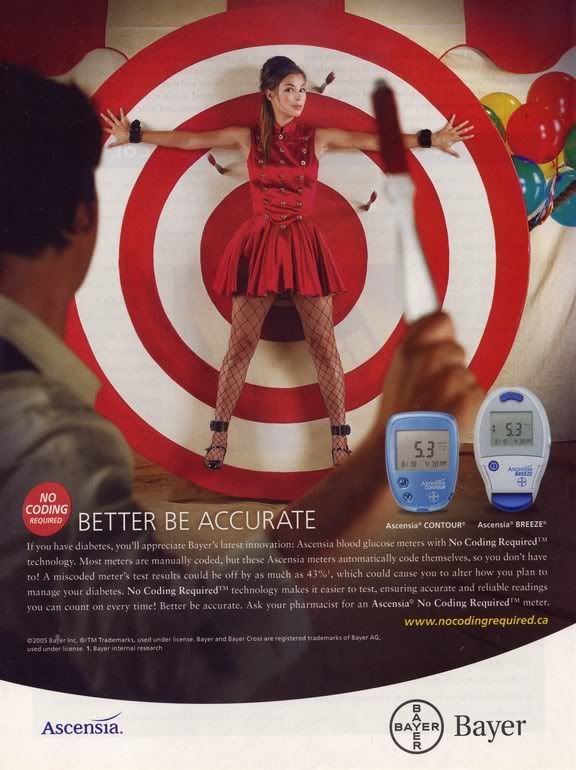
In the past, I have posted a number of advertisements in which dead women or women in peril are used to sell something. Unfortunately, I keep coming across ads like this, in which a woman has been hurt or is about to be hurt. It's presented as something sexy, and/or it's presented as something humorous. Of course, it is never presented as something serious, as something worthy of empathy or concern.
The "woman" in the above ad is merely part of a woman. It is half of a body with no face and no personality characteristics, none of the things that represent what a real woman is. Therefore, the image turns a woman's body into an object, a commodity.
I've saved the worst for last, and it is a still photo from what I believe was an Australian television spot for Foster's beer.
This was a commercial in which men had to come up with creative ways to keep their beer in the shade. What can I even say about this one? This is up there with the D & G ad in terms of how offensive I think it is, mainly because of the look on this girl's face. In the other ads, the women are smiling...or they don't have heads. Well, I'm not sure those options are much better. Anyway, here is some more information on the ad.
Sexy or Sadistic? -- The Dolce & Gabbana gang-rape fantasy ad has been pulled. Love your Body -- This great website is also in the fight against sexist advertising. This is what they had to say about the D & G ad:
This ad is beyond offensive, with a scene evoking a gang rape and reeking of violence against women. In an interview, NOW Foundation President Kim Gandy said, "It's in Esquire, so they probably don't think a stylized gang rape will sell clothes to women, but what is more likely is that they think it will get them publicity. It's a provocative ad but it is provoking things that really are not what we want to have provoked. We don't need any more violence."
Spain bans skinny sizes on mannequins -- “'We are aiming for a model of healthy beauty,'” said Angeles Heras, director of consumer affairs at the Health Ministry. “'There is a lot pressure, not just from the fashion world but society in general, for women to seek models of beauty that are unreal and even unhealthy.'”
"Dehumanization is a process by which members of a group of people assert the "inferiority" of another group through subtle or overt acts or statements. Dehumanization may be directed by an organization (such as a state) or may be the composite of individual sentiments and actions, as with some types of de facto racism. State-organized dehumanization has been directed against perceived racial or ethnic groups, nationalities (or "foreigners" in general), religious groups, sexes, sexual minorities, disabled people as a class, economic and social classes, and many other groups." -- wikipedia
"Anthropologists Ashley Montago and Floyd Matson famously wrote that dehumanization might well be considered "the fifth horsemen of the apocalypse" because of the inestimable damage it has dealt to society. When people become things, the logic follows, they become dispensable - and any atrocity can be justified."